
India's economic growth slowed to 7.4 per cent in the March quarter, bringing down the annual growth rate to 6.5 per cent during 2024-25, according to official data released on Friday. The growth in the January-March period was lower than the 8.4 per cent expansion in the year-ago quarter.

India's industrial production growth decelerated to a six-month low of 2.9 per cent in February 2025, mainly due to poor performance of the manufacturing, mining and power sectors, according to official data released on Friday. The government also revised upward the industrial growth figure to 5.2 per cent for January 2025 from the provisional estimate of 5 per cent released in March.
India's industrial production growth remains almost flat at 3 per cent in March sequentially, though, on a year-on-year basis, it slipped from 5.5 per cent, mainly due to poor performance of the manufacturing, mining and power sectors.

Retail inflation slowed to 5.48 per cent in November compared to 6.21 per cent in October, mainly due to easing food prices, especially vegetables, according to government data released on Thursday. According to Consumer Price Index (CPI) data released by the National Statistics Office (NSO), the inflation in the food basked reduced to 9.04 per cent in November. It was 10.87 per cent in October and 8.70 per cent in November 2023.

India Ratings on Thursday said that any broad-based or strong recovery in corporate capital expenditure was unlikely in the upcoming financial year 2026 (FY26) due to uncertainty of domestic and external demand. The uncertainty is adversely affecting the overall corporate sector capex. Interest rates on credit are not the primary deterrent to decisions about capital expenditure, said Soumyajit Niyogi, director, core analytical group, Ind-Ra, in a webinar on the credit market outlook.

India's industrial production growth slows to 3.2 per cent in December 2024, mainly due to poor performance of mining and manufacturing sectors, according to official data released on Wednesday. The government has also revised the November 2024 IIP figure to 5 per cent from the provisional estimate of 5.2 per cent released in the previous month.

When the government chooses to either ignore or use identity documents only when it suits them, it shakes people's sense of stability, notes Shyam G Menon.
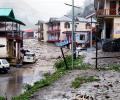
'...they always address problems superficially, never tackling root causes.' 'Currently, the policy response will focus on immediate relief -- getting people to safety, providing facilities, clearing debris.' 'This is necessary, but once immediate relief operations end, everything returns to 'normal' without addressing underlying vulnerabilities.'

SEBI alleges Jane Street placed bets on the stock market falling and then acted in a way to make the market actually fall so it could win its bet.

Updated new base years for national accounts and other macro-indicators are expected to come into effect from January-February 2026, coinciding with the first and second advance estimates of national income for FY26, senior official sources aware of the development told Business Standard. "The statistics ministry set up the Advisory Committee on National Accounts Statistics (ACNAS) earlier this week. "It will advise on the base year for GDP (gross domestic product) and its alignment with other macro-indicators.

A year after the RG Kar rape-murder Swarupa Dutt/Rediff look at the city where it happened, Kolkata -- its study in dichotomy, at once the self-proclaimed cultural capital of India as also a petri dish for a peculiar rage that breeds crimes against women.
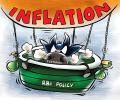
Retail inflation slipped to seven-month low of 3.61 per cent in February mainly due to easing prices of vegetables, eggs, and other protein-rich items, creating space for the RBI to go for another cut in interest rate next month.

India's economic growth rate decelerated to 6.2 per cent in the October-December quarter this fiscal, mainly due to poor performance by mining, manufacturing and all other sectors, with the exception of agriculture. However, on a sequential basis, the economic growth rate in the third quarter showed improvement over 5.6 per cent recorded in the second quarter.
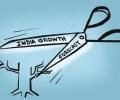
The GDP growth is expected to be about 6.3 per cent in the current fiscal year, a tad lower than the government's estimate of 6.4 per cent, owing to several factors such as weak demand, SBI research report said on Wednesday. According to the first advance estimates (FAE) of National Income for 2024-25 released by the National Statistics Office (NSO), released on Tuesday, India's economic growth rate is estimated to slip to a four-year low of 6.4 per cent in 2024-25, because of poor showing by the manufacturing and subdued investments.

India's economic growth rate is estimated to slip to a four-year low of 6.4 per cent in 2024-25, mainly on account of poor showing by the manufacturing and services sector, according to government data released on Tuesday. The gross domestic product (GDP) rate of 6.4 per cent will be the lowest since the Covid year (2020-21) when the country witnessed a negative growth of 5.8 per cent.

Continuing the downward trend, retail inflation fell to a five-month low of 4.31 per cent in January, mainly due to a decline in the prices of vegetables, eggs, and pulses. The Consumer Price Index-based retail inflation was 5.22 per cent in December and 5.1 per cent in January 2024. The previous low inflation was in August 2024 at 3.65 per cent.

Retail inflation dipped marginally to a nearly six-year low of 3.34 per cent in March due to a decline in prices of vegetables and protein-rich items. The Consumer Price Index (CPI) based inflation was 3.61 per cent in February and 4.85 per cent in March last year.

AIADMK leader Edappadi K Palaniswami is under pressure from his party as his unclear stand on the BJP alliance has brought back fears among party workers that the party may lose its identity, be forced into an unwanted coalition, and be taken over by the BJP later, observes N Sathiya Moorthy.

In 2025 alone, at least 50 suicides linked to online gambling losses have been reported across India. According to FIRs, the victims were addicted to betting, largely driven by cricket, rummy and poker.

South African President Cyril Ramaphosa, a former anti-apartheid activist and freedom fighter, responded to Trump's claims at their meeting in the Oval Office diplomatically, countering Trump's assertions.

Since the poverty estimates released by the Planning Commission determine the eligibility of benefits such as BPL allocation of foodgrain to the states, he said, "a firm choice of reference period is necessary." Different reference periods (30-day recall period and 365-day recall period) used in the early surveys, he added, had prompted the Planning Commission to come out two with sets of poverty figures.
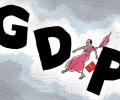
The upcoming Union Budget to be presented on February 1 is likely to assume a nominal gross domestic product (GDP) growth between 10 and 10.5 per cent for FY26, a Business Standard poll of 10 economists showed. The first advance estimates released by the National Statistics Office (NSO) had estimated a nominal GDP growth of 9.7 per cent for FY25. Nominal GDP, calculated at current market prices, factors in the effect of inflation. It is used as the base to calculate crucial macroeconomic indicators, such as fiscal deficit, revenue deficit, and debt-to-GDP ratio.

The government may save over Rs 70,000 crore (Rs 700 billion) on capital and revenue expenditure allocated towards new schemes in the FY25 Budget that are yet to be implemented.

Retail inflation eased to a one-year low of 4.75 per cent in May as prices of some kitchen items declined marginally, according to government data released on Wednesday. The Consumer Price Index (CPI) based retail inflation was 4.83 per cent in April 2024 and 4.31 per cent in May 2023 (previous low).

Maharashtra Deputy Chief Minister Eknath Shinde on Monday attributed early arrival of the southwest monsoon and heavy rainfall in a short span for the inundation of low-lying areas in Mumbai, which disrupted road and railway traffic.

A new report, "India Justice Report 2025", highlights the stark gender disparity in India's police force, with less than 1,000 women holding senior positions like Director-Generals and Superintendents of Police. Despite growing awareness about the need for gender diversity in law enforcement, not a single state or Union Territory has met its target for women's representation in the police force. The report also emphasizes the significant challenges faced by the justice system as a whole, including infrastructural deficiencies, overcrowding in prisons, and inadequate staffing levels. The report calls for systemic reforms to address these issues and ensure a more equitable and accessible justice system for all.

Census exercise with caste enumeration will be carried out with the reference date of October 1, 2026, in snow-bound areas like Ladakh and of March 1, 2027, in the rest of the country, the Home Ministry announced on Wednesday.
Retail inflation breached the Reserve Bank's upper tolerance level, soaring to a 14-month high of 6.21 per cent in October mainly on account of rising food prices. Inflation based on the consumer price index (CPI) was 5.49 per cent in September and 4.87 per cent in the year-ago month. Retail inflation trended below the RBI's upper tolerance band of 6 per cent since September last year.

Indian students at Harvard, on condition of anonymity, shared their concerns and experiences of the last few months during which the prestigious university has seen relentless attacks by the Trump administration.

While acknowledging that they needed strong allies for a chance in the assembly polls, AIADMK cadres seemingly prefer actor-politician Vijay's Tamilaga Vettri Kazhagam to the BJP, owing to the latter's 'communal agenda' and consequent hardline Hindutva image, explains N Sathiya Moorthy.

The number of people averse to the surveys by the National Statistical Office (NSO) has more than doubled over the last five years between the 75th National Sample Survey (NSS) round (July 2017- June 2018) and the 79th NSS round (July 2022-June 2023), the Ministry of Statistics and Programme Implementation MoSPI) said on Friday in a conference organised to discuss the issue of 'non- responsiveness' to its sample surveys. The ministry said that nearly 6.9 per cent people in urban areas surveyed by the NSO for the 79th NSS round did not participate in the exercise, while the number of people in rural India that refused to participate in these surveys stood at 3.9 per cent.

Goa has the highest number of people who could 'search the Internet for information and can send or receive e-mails and can perform online banking transactions'.

Soaring vegetable prices pushed the retail inflation rate to a nine-month high of 5.49 pr cent in September, according to government data released on Monday. The consumer price index (CPI)-based retail inflation rate was 3.65 per cent in August and 5.02 per in September 2023. The previous high inflation rate was witnessed in December 2023 at 5.69 per cent.

As of March 2023, the share of accounts belonging to women stood at 36.4 per cent (917.7 million) of the total 2.52 billion individual accounts.
Discrepancies in computation of advance estimates of the country's Gross Domestic Product for 2023-24 stood at Rs 2.59 lakh crore as against (-) Rs 3.80 lakh crore in 2022-23 and (-) Rs 4.47 lakh crore in 2021-22, according to National Statistical Office (NSO). On Friday, the NSO released its first advance estimates of national accounts which showed that the Gross Domestic Product (GDP) or Indian economy will grow at 7.3 per cent in 2023-24, slightly higher than 7.2 per cent in 2022-23.

The majority of these calls originate from foreign-based gangsters or their associates, using Voice Over Internet Protocol or international phone numbers, they said.

While data can empower communities, it reinforces identities, making local politics more caste-centric, with decisions increasingly contested on the grounds of representation.
Such dynamics could lead to shifting alliances and, in the worst case, local governance getting paralysed as each group demands proportional power-sharing, explain Amitabh Kundu and Mehebub Rahaman.

Headline growth was quite weak heading into the Covid period but averaged 6.4 per cent and 6.7 per cent in the five years between FY16 and FY20 for GVA and GDP respectively, points out Abhishek Upadhyay.

After a gap of nearly two years, India's industrial production turned negative as it contracted by 0.1 per cent in August, mainly due to a decline in the mining and power generation sectors' output, in addition to an almost flat expansion in the manufacturing sector. According to the data released by the National Statistical Office (NSO), factory output growth based on the Index of Industrial Production (IIP) has also been revised downwards for July to 4.7 per cent from the earlier estimate of 4.8 per cent. "The IIP growth rate for the month of August 2024 is (-) 0.1 per cent, which was 4.7 per cent in the month of July 2024," NSO said in a release.
Retail inflation declined to a three-month low of 5.02 in September, mainly due to easing food prices, according to the government data released on Thursday. The inflation has come back to the Reserve Bank's comfort level of below 6 per cent after a gap of two months. The inflation based on the consumer price index (CPI) was 6.83 per cent in August and 7.41 per cent in September 2022.
 © 2026 Rediff.com - Advertise with us - Disclaimer - Privacy Policy - Sitemap - Feedback - About us - Terms of use - Grievances